
A crack evolves by 0.2 mm over several weeks. Is this significant? Is it related to a change in disorder? Should monitoring be intensified?
The value alone does not always provide an answer.
In the context of structural monitoring, one of the first elements of analysis remains the behaviour of the crack over time. This is the whole point of continuous monitoring: no longer just comparing two isolated measurements, but observing a trend, cycles, a potential acceleration or conversely a stabilisation.
Temperature then provides particularly useful supplementary information for interpreting these variations.
A crack does not behave the same way all year round
The materials making up a structure react to temperature variations.
Béton, maçonnerie, acier ou bois se dilatent et se contractent sous l’effet des variations thermiques. Sur un bâtiment ou un ouvrage existant, ces mouvements sont également influencés par les assemblages, les appuis, les matériaux voisins, l’orientation ou encore l’exposition au soleil.
These phenomena can therefore be reflected in the movements measured at a crack.
This means that a crack can show regular variations without these necessarily corresponding to a worsening of the disorder.Conversely, a crack may gradually adopt a behaviour different from that observed so far.
To properly interpret this evolution, it is relevant to carry out monitoring over the four seasons, for at least a year. This allows for the observation of the crack's behaviour both during the winter period, generally colder and wetter, and during the warm and dry periods, and especially to check if it returns to a state comparable to that observed a year ago.
It is precisely this long-term vision that allows for a better distinction between seasonal movements and a sustainable evolution of disorder.
The first essential piece of information: behaviour over time
Even before looking at the temperature, a connected sensor already provides a fundamental element: the history of the crack.
Over several weeks or months, it becomes possible to observe:
- its usual amplitude of variation;
- the possible presence of cycles;
- a trend towards opening or closing;
- a stabilisation;
- an acceleration;
- or a gradual change in behaviour.
A variation of 0.2 mm does not have the same significance if it corresponds to a cycle already observed several times or if it appears suddenly after several months of stability.
The question is therefore not only:
"How much has the crack moved?"
but also:
"How has it behaved since the start of monitoring?"
Temperature provides the context
By adding temperature to this analysis, it becomes possible to search for relationships between the observed movements and environmental conditions.
Let's take a crack monitored for six months. If its opening and closing regularly follow the variations in temperature, this information helps the expert to characterise its usual functioning.
However, it is not concluded that temperature is the only cause of the movements.
But it becomes a contextual element that allows for a better understanding of the observed data.
This is particularly interesting when the monitoring covers several seasons.
A behaviour observed in January can be very different from that recorded in July. An analysis limited to a few days or a few spot measurements can therefore provide a partial view of the situation.
What becomes interesting: the change in behaviour
The interest in monitoring also appears when the usual relationship begins to evolve.
Imagine that a crack has shown regular variations accompanying the temperature cycles for several months.
Then, gradually, its opening increases while the temperatures remain within the ranges already encountered. This shift deserves more attention.
The raw variation is no longer the only useful information: it is the change compared to the historical behaviour of the crack that becomes interesting.
In practice, it is this logic that gradually allows us to distinguish between:
a recurring behaviour already observed and an evolution that deviates from the usual functioning of the structure.
Research in Structural Health Monitoring is currently closely interested in this question: how to distinguish what pertains to the actual behaviour of the structure from what is influenced by its environment? Temperature is one of the key parameters to integrate in order to avoid drawing hasty conclusions from a measured variation.
Temperature and cracking: no universal rule
However, one must avoid a too simplistic reading. An increase in temperature does not systematically mean that a crack will close. And a decrease in temperature does not automatically mean that it will open.
Behaviour depends on many parameters:
- nature and geometry of the structure;
- materials used;
- orientation of the work;
- exposure to solar radiation;
- support conditions;
- location of the crack;
- stresses present in the structure.
Two cracks located on the same structure can therefore react differently to the same climatic variations.
This is why the main interest of monitoring is not to apply a generic rule, but to observe the actual behaviour of the instrumented crack..
Why connected monitoring changes the analysis
With manual monitoring, measurements are generally taken at spaced intervals. These readings remain useful, but they may miss intermediate variations and make it more difficult to identify cyclical phenomena.
Connected monitoring, on the other hand, allows for a series of regular measurements.
We then have a much more complete view of the behaviour of the crack:
measurement → history → trend → environmental context.
The temperature enriches this analysis.
Beyond a simple alert threshold
Alert thresholds are essential in monitoring cracks, but they are not always sufficient to interpret a change.
The first step is to check if a threshold is exceeded on the raw measurement. It is necessary to then analyse the influence of temperature to determine if this exceedance remains real once the thermal effect is taken into account.
A crack can thus temporarily exceed a threshold due to a known thermal cycle, while another may remain below this threshold while showing a gradual drift.
The history of measurements, the rate of change, and environmental conditions therefore allow for a more refined analysis.
Measuring to understand a behaviour
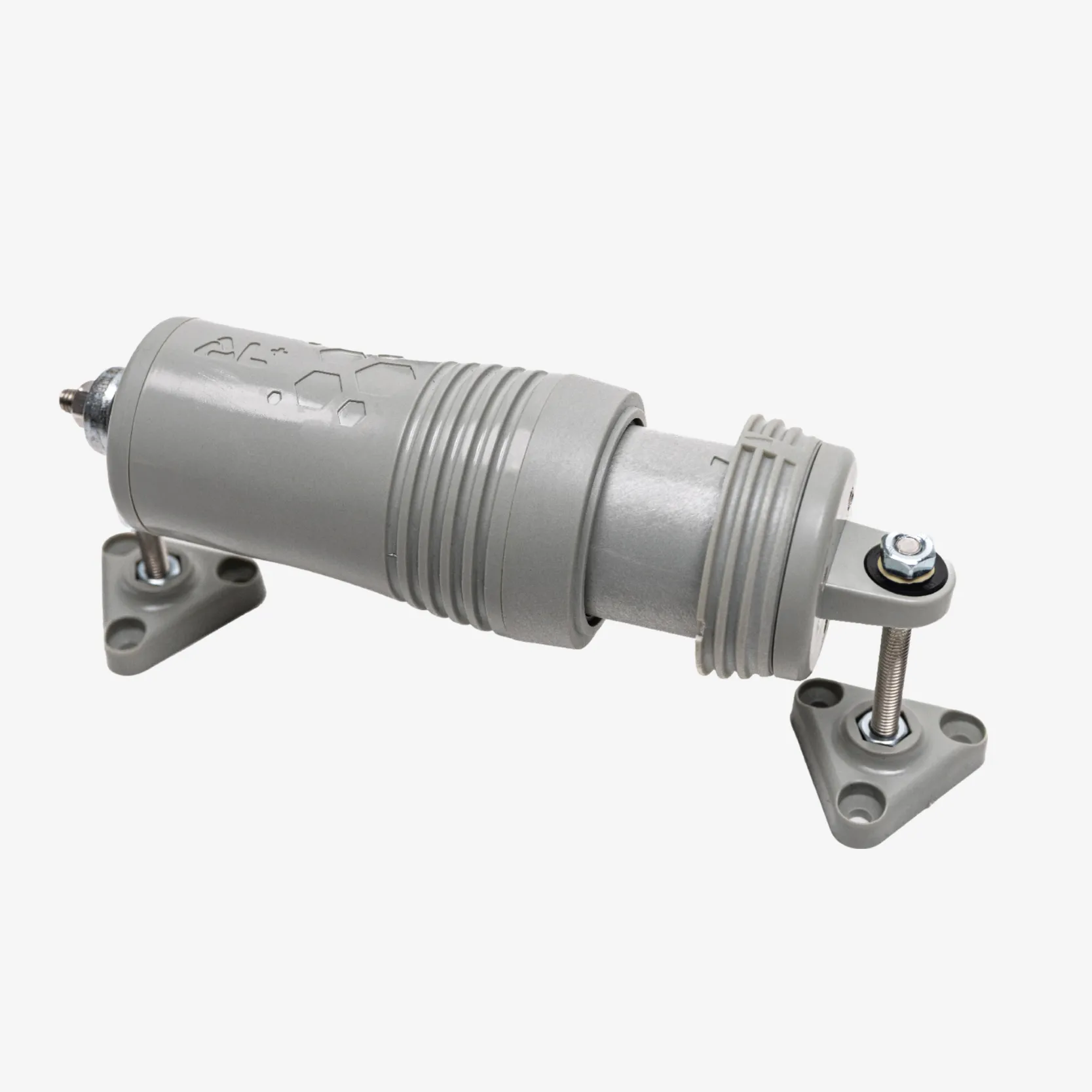
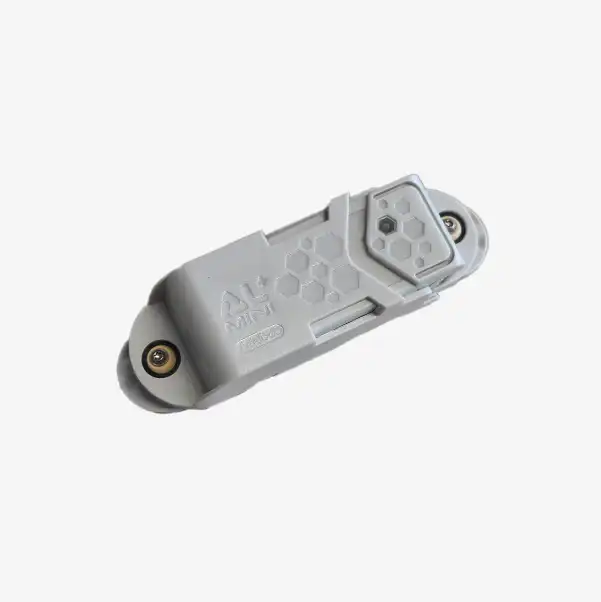
At FEELBAT, connected crack monitoring solutions allow for the integration of measurements into this long-term monitoring logic. The goal is not simply to know the opening of a crack at a given moment.
It is to be able to observe how it evolves over several weeks, several months, or several years, and then to use complementary data such as temperature to enrich this reading.
An isolated measurement provides a value, a history provides a behaviour, and temperature adds additional context to help interpret it.
C’est cette combinaison qui permet progressivement de passer d’une simple acquisition de données à un véritable outil d’aide à l’analyse pour les professionnels du bâtiment, de la structure et de la géotechnique.
Suivi de fissures connectés :
Découvrez toutes nos solutions