
With the intensification of drought episodes, heatwaves, and then soil rehydration, the phenomenon of shrink-swell of clays is becoming increasingly significant in France.. Clay soils contract when they dry out, then swell when they are rehydrated.
These repeated movements can cause significant disorders in buildings: cracks, deformations, differential movements, or weakening of foundations.
Today, the shrink-swell market for clays no longer concerns only individuals affected by cracks. It represents a major issue for all professionals in construction, geotechnics, expertise, and management of built heritage.
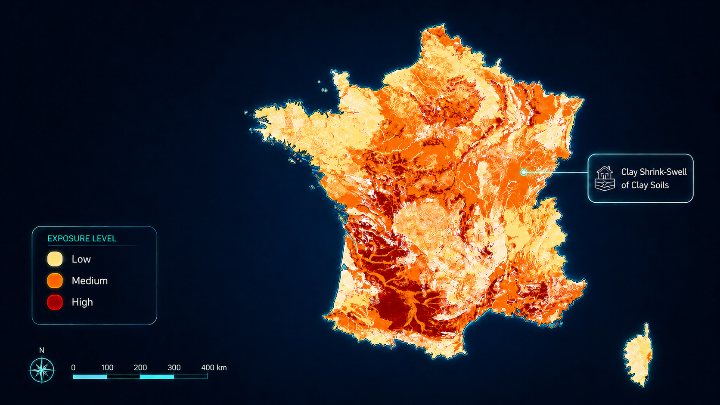
In France, the RGA market is considerable: 55% of the hexagonal territory is now classified as being in a medium or high exposure zone,, compared to 48% previously. This represents approximately 12.1 million exposed individual houses, or 61.5% of the individual housing stock.
The risk map by level of exposure in France allows for visualising the extent of the phenomenon and identifying areas where monitoring of RGA-related cracks becomes a priority issue. (see image below)
In addition, there is a significant increase in the number and cost of claims related to drought. The average annual burden of the Cat Nat scheme related to drought has risen from around 400 million euros per year over the period 1989–2015 to nearly 1 billion euros per year since 2016. The year 2022 marked a record, with around 3.5 billion euros in claims related to drought.
Projections confirm this trend: the damage related to the shrink-swell of clays could reach 43 billion euros between 2020 and 2050, of which 17.2 billion is directly attributable to climate change.
For professionals in construction, geotechnics, and expertise, this evolution opens a concrete opportunity: to support more buildings over time through monitoring, measurement, and analysis solutions.
From one-off visits to ongoing monitoring services
Until now, many interventions related to RGA relied on a one-off diagnosis, a site visit, or an assessment carried out at a specific moment. However, a crack is not always understood from a single observation. Its evolution depends on the seasons, episodes of drought, soil rehydration, the nature of the building, and its environment.
This is where monitoring makes complete sense.
Thanks to building crack monitoring, professionals can track movements in real-time and over time. The data collected allows for the objectification of disorders, a better understanding of the building's behaviour, and strengthens the conclusions of an assessment or technical study.
For a design office, a building expert, a construction company or a local authority, offering a crack monitoring service thus allows for a shift from a one-off approach to a continuous support approach.
The professional can thus :
- monitor the opening of a crack after a dry spell;
- control the evolution of a cracked building over time;
- measure the effectiveness of repair work;
- produce regular reports for their clients;
- provide objective data within the framework of an expertise or a technical mission;
- prioritise interventions on a portfolio of exposed buildings.
Connected sensors at the service of RGA monitoring
In the face of the increase in claims related to the shrink-swell of clays, FEELBAT supports professionals with solutions for monitoring cracked buildings that are easy to deploy, remotely operable and suitable for long-term monitoring.
This approach allows design offices, building experts, construction companies and local authorities to structure a genuine crack monitoring offer. Instead of limiting themselves to a one-off intervention, they can offer their clients a crack monitoring service over several weeks, several months or several seasons.
The connected crack meters, such as the DELTA L+ or the DELTA L+ Mini, allowing the measurement of the opening or closing of a crack over time. Installed directly on the building, they collect precise, timestamped data that can be accessed from the FEELBAT application.
RGA: Our solutions
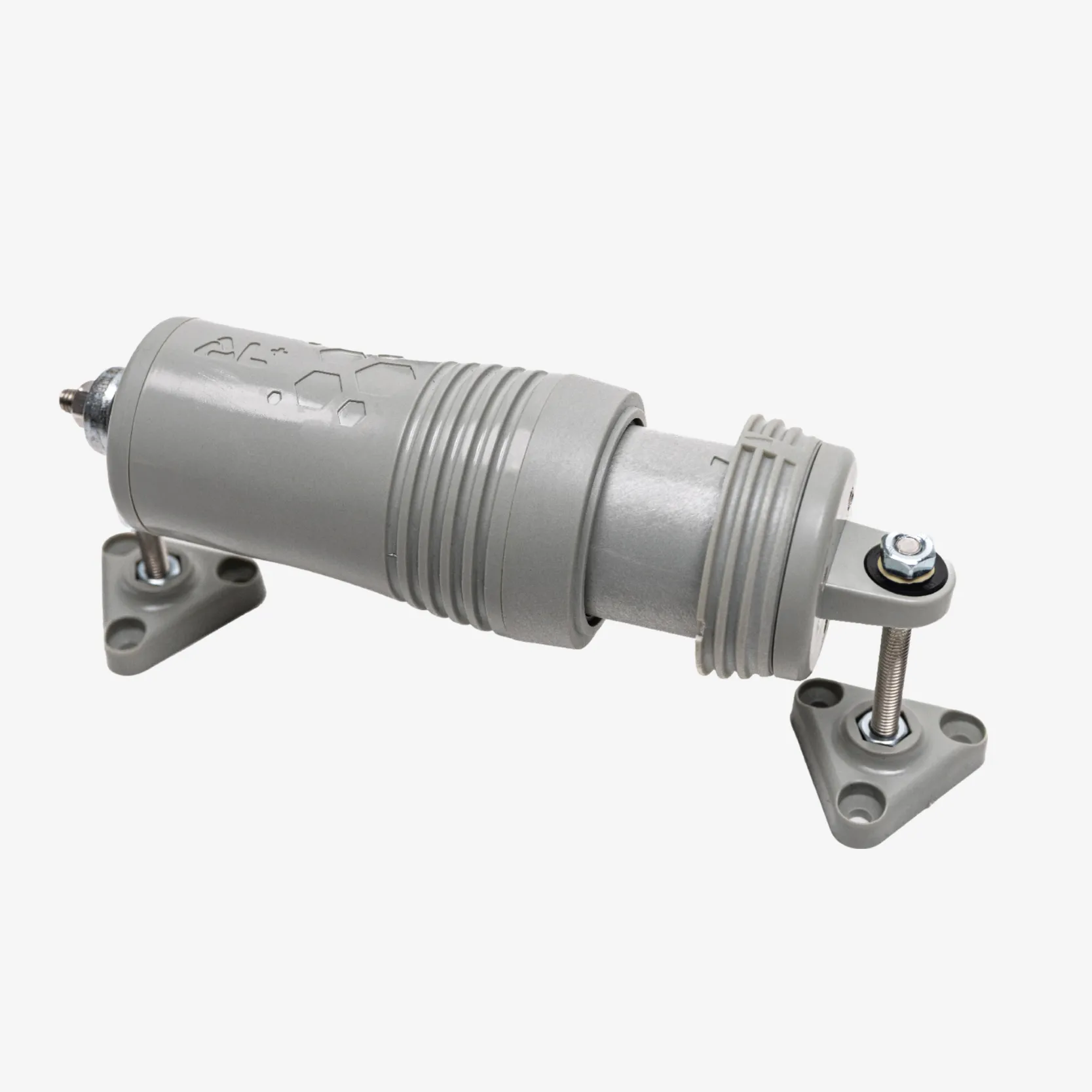
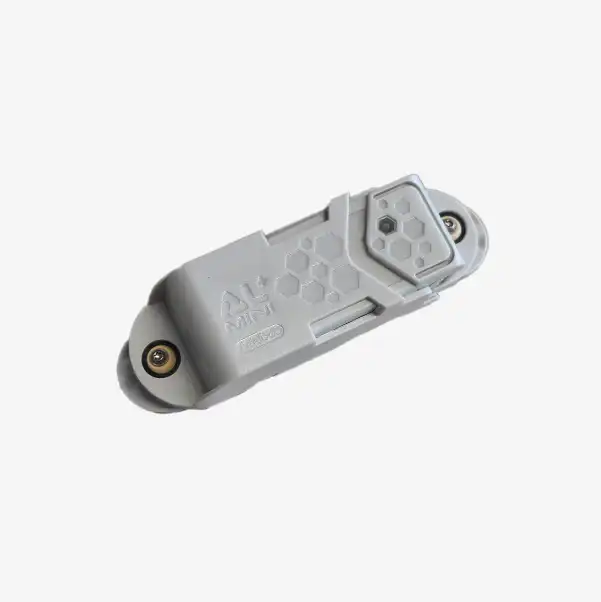
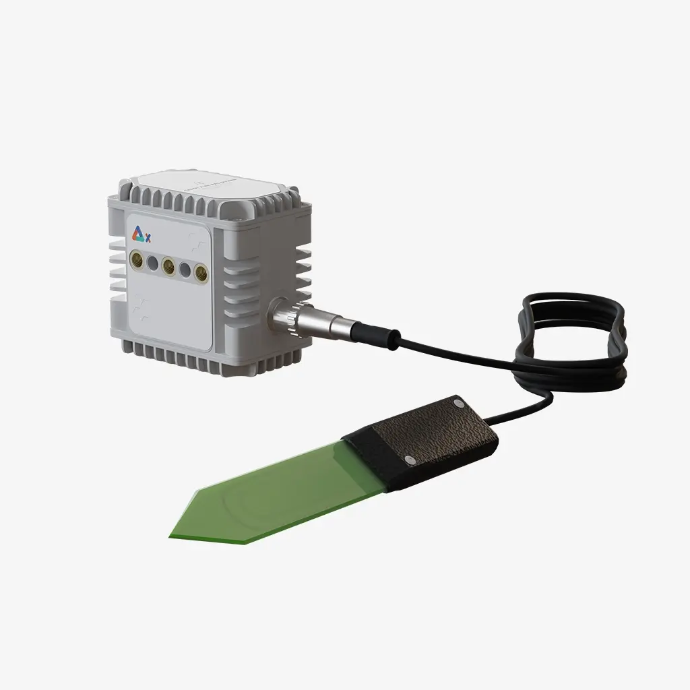
As part of a geotechnical mission RGA, crack sensors are the first building block of monitoring. They allow for the direct measurement of the impact of the phenomenon on the building and track the evolution of disorders over time.
For a more comprehensive analysis, soil moisture sensors can also be added. They allow for a finer study of the link between water variation, clay soil, drought, rehydration, and building movements.
Monitoring does not replace professional expertise: it enhances it. It provides objective data, facilitates decision-making, and enables professionals to offer a recurring, differentiating, and high-value-added monitoring service.
A winner of France 2030, FEELBAT designs the monitoring solutions of tomorrow to better anticipate the movements of buildings related to the shrink-swell of clays.
This project was funded by the State as part of France Relance, now integrated into France 2030, and operated by ADEME.
In Brief
In the face of increasing episodes of drought, monitoring the cracks related to the shrink-swell of clays allows for a better understanding of the evolution of disorders and anticipating risks to the built environment.
Monitoring provides objective data over time, useful for professionals to analyse movements, adapt their recommendations, and support technical decisions.