
Stair-step cracks are easily recognisable: they follow the joints of the masonry, forming a succession of steps. When they appear on a brick, block, or stone facade, they can reveal movement of the building, particularly at the level of its foundations.
But why do these cracks appear? Are they necessarily serious? And how can you tell if they’re still developing?
Why does a crack take on a stair-step shape?
Les murs en maçonnerie sont composés de blocs assemblés par des joints de mortier. Lorsqu’une contrainte s’exerce sur le bâtiment, la fissure peut suivre ces zones de faiblesse plutôt que de traverser directement les matériaux.
It then progresses horizontally and vertically along the joints, creating this characteristic stair-step shape.
This type of crack can notably appear near:
- the corners of the building;
- doors and windows;
- an extension or a part built at another time;
- an area where the foundations do not rest on homogeneous soil.
The wall then experiences tensile and shear stresses that it cannot absorb without cracking..
Several causes can be behind these movements:
- differential settlement of the soil;
- shrink-swell of clay soils;
- a pipe leak;
- poor drainage of rainwater ;
- an insufficiently compacted fill ;
- work or excavations carried out nearby ;
- a difference in foundation between two parts of the building.
The foundation movements in question
The appearance of the crack does not, however, allow for its origin to be identified alone. It must be analysed taking into account the soil, the structure, and the environment of the building.
Above all, visual inspection allows for the identification and characterisation of the crack, but it is not sufficient to determine whether the phenomenon is still active. Only monitoring over time can reveal whether the crack is evolving, stabilising, or reacting to certain conditions.
Is a stepped crack dangerous?
Not all stepped cracks present the same level of risk.
An old and stabilised crack will not have the same significance as a crack that opens quickly or reappears after being filled.
Several signs should draw attention:
- a visible increase in the opening ;
- a shift between the two sides of the crack ;
- the appearance of new cracks ;
- doors or windows that close poorly ;
- a subsidence of the ground or paving ;
- a crack visible both inside and outside ;
- an evolution after a period of drought or heavy rain.
Dans ces situations, l’intervention d’un professionnel permet de déterminer si des investigations structurelles ou géotechniques sont nécessaires.
Why is a one-off observation not sufficient?
A photo or a manual measurement indicates the state of the crack at a specific moment, but does not always allow us to know if it is actually evolving.
However, a crack can :
- open gradually ;
- remain stable for several months ;
- evolve according to the seasons ;
- open during dry periods and then partially close ;
- react to temperature variations.
To understand the phenomenon, it is therefore necessary to monitor its evolution over time.
Comment suivre l’évolution d’une fissure en escalier ?
Monitoring can be carried out using a crack gauge installed on either side of the crack.
Les mesures obtenues permettent d’observer précisément les variations d’ouverture et de déterminer si le mouvement est stable, progressif ou cyclique.
Depending on the configuration of the building and the phenomenon to be monitored, this monitoring can be supplemented by :
- measuring the shear or the uplift of the crack ;
- the comparison of the evolution of several cracks ;
- monitoring the inclination of the wall ;
- measuring the temperature and analysing the meteorological data.
- the measurement of the water level and monitoring the humidity in the soil and materials
Connected monitoring allows for remote consultation of measurements, alerts in case of exceeding a threshold, and limits manual readings on site. It also provides objective data to reassure occupants or managers and to verify, after work, that the crack is stabilised and that the building no longer shows significant movement..
From a visible crack to an understanding of the building
A stair-step crack is an important indicator, but it is not sufficient on its own to make a diagnosis.
The aim is to determine whether it reflects a past movement that has stabilised or a phenomenon that is still active. By measuring its evolution over time, engineering consultancies, experts and building managers have access to objective data to guide their investigations and decisions.
FEELBAT’s monitoring solutions enable remote tracking of crack development and structural behaviour, providing a better understanding of the causes and progression of structural defects.
A crack should not only be observed. It must be placed in the history of the building and monitored for long enough to understand what it truly reveals.
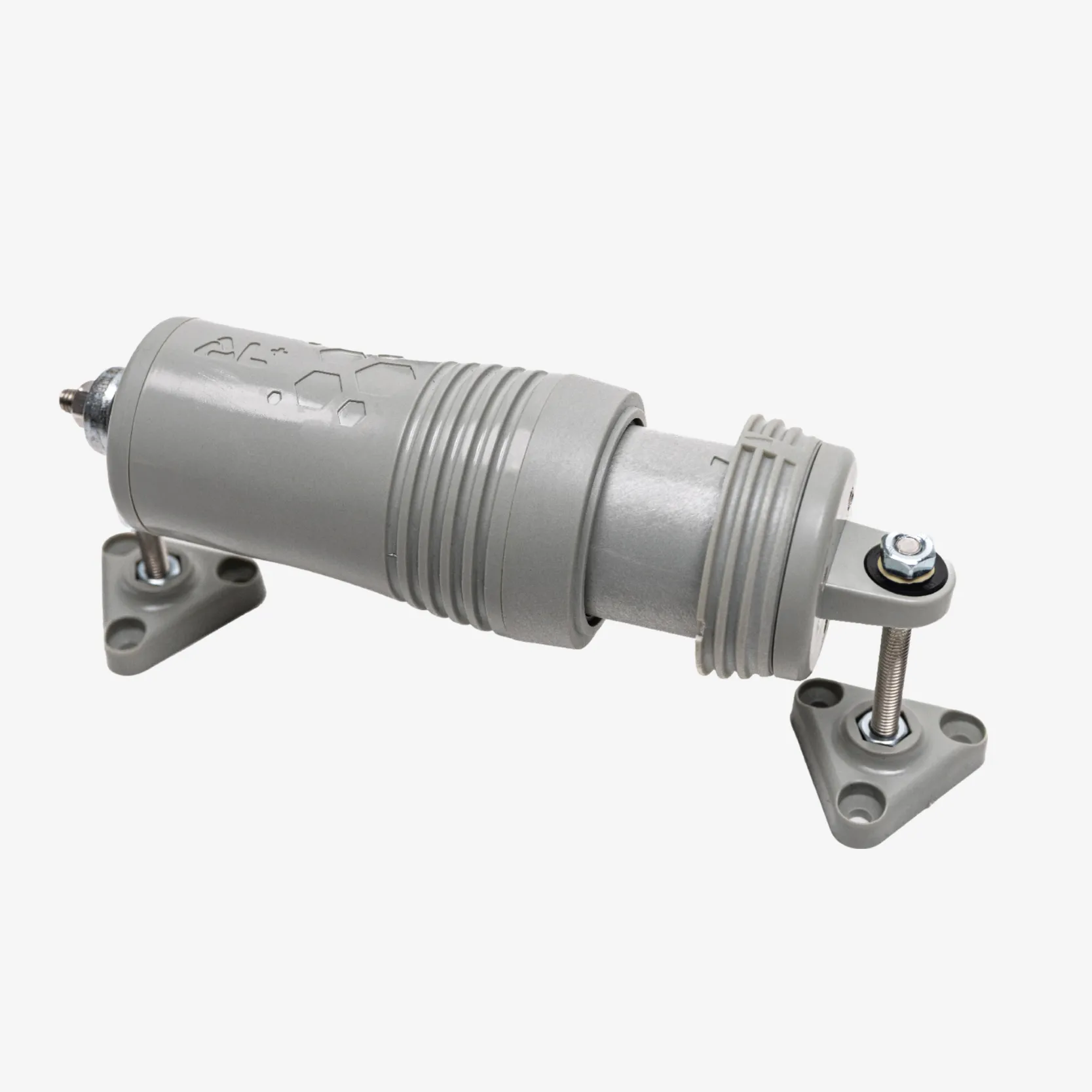
Delta L+
The DELTA L+ is a connected sensor designed to monitor cracks accurately and autonomously. It measures the movements of the crack, both on-site and remotely, and records the outside temperature, accessible directly from a smartphone.
Our solutions: connected crack meters
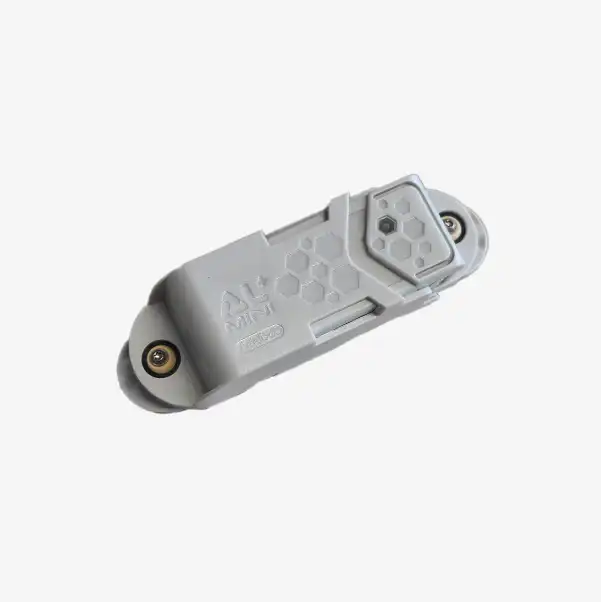
Delta L+ Mini
The DELTA L+ mini offers precise and autonomous monitoring of cracks, as well as the impact related to the sun exposure of the façade. It can be attached by gluing according to our patented device and can also be fixed mechanically. , ainsi que l'impact lié à l’exposition au soleil de la façade. Il peut se fixer par collage selon notre dispositif breveté et peut également être fixer mécaniquement.
Related Questions
No. It can also be influenced by a chaining defect, a weakness around an opening, or a difference in behaviour between two parts of the building.
Filling a crack improves its appearance, but does not necessarily address the cause. If movement is still occurring, it is likely to reappear.
The duration depends on the phenomenon being investigated. To observe seasonal behaviour related to the ground or humidity, monitoring for several months may be necessary.